
What a Great Teacher Leaves Behind: A Son, a Classroom and the Profession We Owe it to Our Children to Get Right
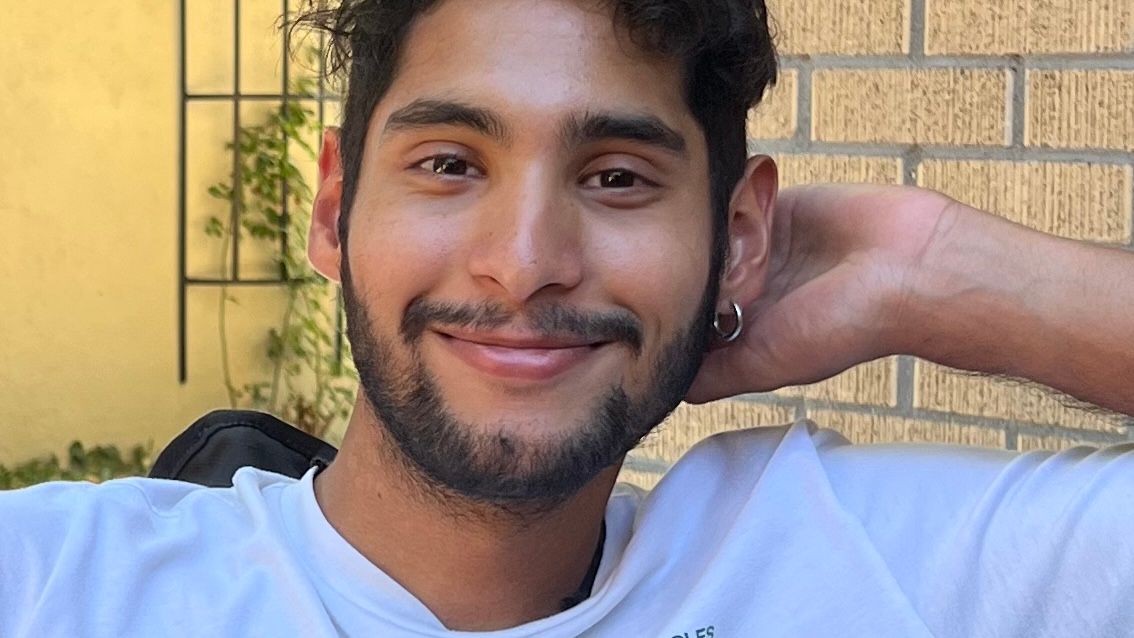
I am a retired grade schoolteacher and university professor who spent more than a decade directing a teacher preparation program. I reluctantly retired in 2024 and wanted to continue writing. My sons encouraged me to publish on Medium, so when I posted for the first time about teaching, I felt the excitement of sharing my thoughts. A year ago, I was ready and felt confident to continue writing.
Then, within a week, my whole world shattered into a million pieces. My youngest son, Andrew, who was a month away from turning 27 passed away while camping in New Mexico. He had been diagnosed when he was 14 with a condition called Vascular Ehlers Danlos syndrome, the worst of the EDS syndromes. We knew that his life would be difficult, however, we never imagined he would be taken away from us so young. He had earned a biochemistry degree in 2020 and a few years later decided that he wanted to teach. He was accepted into a Teacher Residency program in Denver called Public Education and Business Coalition (PEBC), a fantastic program that impressed me, the professor of teacher prep, extensively. He fast became a colleague to his mentor teacher Andrea, and to everyone he worked with at his junior high. After a year in 6th grade science, he was hired full time to teach 7th grade math. I remember saying, oh my goodness that combination must be one of the toughest there is….7th grade!12–13-year-olds!Math! He felt differently and was very excited for his first classroom and full-time teaching job!
It has taken me nearly a year to write his story. I promised myself and spoke to him, even though he wasn’t physically with me, about my plan to write about him, his teaching and the profession in general. I share this for anyone who wants to read, and I hope especially that educators are drawn to it, because Andrew’s story is not only a story of love and loss. It is a story about what teaching, at its very best, can be and should be. It is a story about how rarely we plan to fully “fix” our broken schooling system in the United States.
The Teachers that Came to Pay Their Respect and Share Their Love
A few weeks after Andrew passed, we held a memorial for him in Denver. I was both stunned and deeply moved when the school’s principal and twenty some teachers and staff arrived that Tuesday morning. Their presence said everything. Having taught for fifteen years in public-schools, I knew what it would take to arrange for so many teachers and staff and the building principal to leave a school on a weekday morning. You do not do that for everyone.You do that when someone has meant something real. He had made such a positive impression on everyone in only three years at his school. It was impossible to hold back tears listening to the touching stories about the relationships that they had with my son. Due to his health he had decided to take a leave of absence a few months before and when his principal handed me a bag filled with handwritten messages from Andrew’s students, his “kids,” she hugged me and said, “I am happy he left in December, he had some time to live his life and not worry about work.” His former mentor teacher, Andrea, could not hold back tears. They had built a close relationship. She was a wonderful mentor and shared her expertise with Andrew. She said to me, “he talked about you and your teaching all the time.” I told her that he had also talked about her all the time to me. He was very fortunate to have such a strong, caring mentor. Because Andrew had student taught sixth grade his first year, then moved to seventh grade his next two years hundreds of young people had passed through his classrooms. It would take me nearly two months before I could bring myself to read their messages.
I will always remember when I finally opened the cards and papers that had been staring at me for so long. I sat at my dining room table, alone, crying already before I even opened the first one. I had taught young kids up to fourth grade. His kids were older and knew how to express themselves in their writing. The words they chose to describe their teacher, Mr. Guerrero, were extraordinary.
“You are the best math teacher I ever had, cool and chill. I love your class so much. You make seventh grade fun. There’s never been a time I didn’t want to go to math class.”
“You’re so nice and you helped our community grow.”
“Even when I wasn’t the best to you, you always saw the best in me.”
“You are always happy and joyful no matter what, so respectful and kind.”
“Thank you for being so awesome, funny, and understanding.”
“You never yelled at us; I am inspired to be like you Mr. Guerrero.”
“You taught me lessons I will never forget.”
“There was never a day that I didn’t want to come to math class.”
“Thank you for an awesome time, I cried nine times. I speak for all of us; it will never be the same without you. You made math fun!
“Thank you for caring for us and being nice and funny and making our day, month, year, minutes, seconds special. You were always there for us.”
One young man wrote simply, “Thank you for being one of the reasons that I wanted to come to school each day.”
The phrase so many wrote, “you made me love math” was amazing to me. I remember when Andrew first moved to seventh grade math, I gently cautioned him. Andrew was extraordinarily gifted; he had always seen mathematical concepts with the kind of effortless clarity that many students never experience. I shared, “Don’t forget that many children fear math. Especially after disruptions of the pandemic, many of your students may have significant gaps. Take the time to know who needs extra support.”
He smiled in that patient way of his. He didn’t need my reminder. He taught how he did because he was a great teacher, one who saw each child not as a unit of academic performance to be graded, but he saw them each as a human being. Each one different, carrying unique needs in mathematics and in life. Some of the messages were written directly to me, his mother. That these adolescents reached across their grief to acknowledge me was humbling in a way that I am still learning to carry.
“He was full of kindness; I will always love him and remember him.”
“He was the best teacher a student could ever ask for. I looked forward to his class every day.”
“Dear Mr. Guerrero’s mom. I want to say that I am so glad that your son was my teacher.
“I am grateful that your son was my teacher even when I know that I got on his nerves he was always there for me even when he didn’t have to be.”
“He was the best teacher a student could ever ask for. I looked forward to his class every day. Thank you for raising such an amazing person so that I was lucky enough to have him as my teacher.”
I share Andrew’s story because he deserves to be known. And I share it because his story illuminates something that I believe is urgent, something the education world needs to hear.
The Words They Remember
For many years, from 2010-2023, I coordinated a teacher preparation program at the University of Pittsburgh called CASE (Combined Accelerated Studies in Education). I was fortunate because this dual certification, dual degree program allowed me to have three years with the same students in cohorts as their adviser and professor in a class each semester. Every year, with each cohort, in one of their earlier classes we discussed what we remembered about the teachers who really stayed with us over the years, who supported us, or at times, changed our lives. The first adjectives shared, that I wrote on my large chart paper were the positive ones that came from students’ stories about moments they will always remember. After that, they shared adjectives that described those teachers that they remember for the sad and devastating moments they caused in their lives, the ones that left a lasting impression of a different kind.
Year after year, the results in this lesson were striking in their consistency. Not one student, in all my years of teaching this class, ever said that their favorite teacher was easy on them, or that they tried to be their friend, or that they gave everyone an A. The words they offered were rich and specific; kind, just, warm, respectful, supportive, inspirational, a good role model, always fair, engaging, didn’t have favorite students, tough, organized, creative, fun, trustworthy, pushed me to succeed, listened to different viewpoints. Treated me like I was important and I mattered. They described people who held them to high expectations while making them feel safe enough to try to do their best.
On the other side of the chart were very different words: mean, hateful, unjust, always had their favorite students, looked down on me, harsh, disorganized, it was their way or the highway, ignored some kids. And then, the one that always made everyone’s head nod in agreement: “We knew that they hated teaching.”
Students know. They always know.Even my little kindergartners that I taught years before knew who liked them and who didn’t.Who treated some with respect and others like they didn’t matter.Who loved being a teacher, and who hated the job. They knew. I am sure that kids in classrooms across the country today know as well. Kids are brilliant in reading teachers.
When I finished reading the letters Andrew’s students had written, I felt a tingle, literally. Every word his students shared, the adjectives that these junior high kids reached for were pulled directly from the list that my university students always shared. Respectful.Kind. Welcoming. Fair. Joyful. Took care of me. Understanding. Someone who saw the best in you, and cared about you, even when you were not returning that respect. I remember my message at the end of my lesson, “Be the teacher that you loved, the teacher who made you feel loved and respected and helped you to do your best academically and as a human being.” I added, “I can teach you all day long, every day, how to teach math, science reading and writing. However, if I don’t teach you how to teach the person, the child. or if you don’t realize that you are not just teaching the subject, but you are also teaching a human being, then you will never be as great of a teacher as you can be.”
Andrew never took one of my courses or sat in my classroom. He and his brother did always hear me talking about my grade school students at home. All those comments I would say, often to my husband Augusto, were typically positive, funny stories. They weren’t painting a picture that I hated teaching. Somewhere in the process of becoming who he was, Andrew became curious, empathetic, relentlessly warm and caring, and philosophical in the way that he thought about others. He always seemed to me like a Chris Martin-ish type of person. Seeing the best in people (it seems he does) and thinking of others. Always wanting to build a team, a community around you where everyone is respected. He never had the “Everyone is an alien somewhere shirt.” But he did have a “Walls are meant for climbing” T-shirt,” from his beloved REI where he had worked for many years. The realization of what my son was like as a teacher, that he brought his full self to this unbelievably important career was one of my proudest moments as a mother, and as an educator. Two years earlier, at the end of the residency year, his fiancé, Jess, who will always be part of our family, told me that he was given the Resident of the Year award by PEBC. She was so proud to be at the dinner with him that night. When he shared this recognition with me, he just told me with a smile, yea, I won an award, that was cool. Sometimes, to this day, I am not sure if he fully realized what he meant to so many people. Or, how many people’s days were positively impacted by being close to him.
What We Lose When We Don’t Prepare People to Become Impactful Teachers
I worked in professional sports before I became a teacher at age 30. I have spent my career thinking about the connection between teaching and coaching. When a great coach shapes a young athlete, we celebrate it. We write profiles. We name gyms. The standard that great coaches set becomes something the profession reaches toward. But we rarely do the same for teachers, and the cost of that silence is enormous. I spent fifteen years teaching in public grade school classrooms, teaching every grade from Pre-K to Grade 4. I taught in an urban/suburban school district that was in Dallas. We had many Title I schools and for my first seven years I taught in a school that was initially ranked number 29 out of 30 elementary schools in the district based on performance. Interestingly I now see reels and carousels on Instagram about raising kids like in the 90s or living like in the 90s. I taught from 1989-2005 and I know exactly what teaching and schools were like then. Not perfect by any means, however a place to work on your teaching craft using more holistic, play-based learning. Lots of projects and tons of professional development about differentiating for students, cooperative learning groups, and VARIOUS ways to teach reading based on the child. My school district required a lot of professional development and then offered other trainings that were optional. We were all highly trained, with great coaching included!
When an Associate Professor in teacher preparation, I wanted to stay in the public school system as much as possible to stay connected. It was to keep in touch, to be with children while observing my university students teach. It was to stay connected to the field that I was supposed to be teaching my university students about. I will share, unfortunately, that most of my colleagues did not see the need to be in schools, even in our laboratory school that was one of the best schools in Pittsburgh. While supervising I witnessed classrooms where children were thriving, where teachers were strong, dedicated, and relentless in working with those who needed extra support. And I also observed the other side. What bothered me the most was hearing teachers scream at the top of their voices at young children. Why? I used to tell my own students, “Don’t ever allow yourself to engage in a fight with a 7-year-old. It is a lose-lose situation, and frankly you are the adult, take the high road.” Authoritarian teachers scare kids into learning, not a great experience.
What I observed over the years and warned my students about was this authoritarian teacher, sometimes they are older, my age, boomers. Oftentimes not, they come in all ages, genders and sizes. They are like one of my students called it “my way or the highway” teacher. A conversation and an expression of caring and wanting to talk about issues could change the situation and been better for both parties.
We have all heard every explanation for why some teachers disengage. The pay. The bureaucracy. The fear. The exhaustion that comes from years of being asked to do more with less, the buildings that sometimes feel less safe than they should. These complaints are all real and I KNOW that there is enough money out there to fix these issues. I do think that we are convinced that all teachers only make $40,000 a year, well it’s not a full year, is it? It’s more like nine months. And it’s not exactly true about the $40,000. There are places where teachers are paid below par wages for what is, I believe the most important career of all. No one would ever get to medical school or Silicon Valley without starting out with a teacher. Google tells me that the average starting teacher salary across the U.S. is close to $50,000. Not high, however, also for nine months, not twelve months with two weeks off.
Reality is teachers need to have higher starting salaries and be able to feel safe where they teach and respected to direct learning in their own classrooms. In many places, including many public schools, that is a reality, in some places not at all. These problems should be addressed urgently and systemically. But, at this very moment, they do not change an important fact, if you choose to stand in front of a roomful of children, your charge involves shaping those children. And if a teacher doesn’t want to shape children’s lives, maybe they need to find another career. The research is unambiguous that teachers alter the trajectory of a young person’s life, for better or for worse. Research also suggests gender differences in teacher perceptions and classroom interactions. Studies comparing teacher-assigned grades with blind external assessments have found systematic grading differences disadvantaging boys (Contreras, 2023), while observational research shows imbalances in teacher attention and interactions between boys and girls (Bassi et al., 2018).
These are all problems that need to be addressed completely. When I taught grade school I used to be told that I was a good “boy” teacher. My sons were not born yet when I started teaching and frankly, I wasn’t sure what that meant or what I was doing that made me a good boy teacher. I will say that I came to teaching as a second career and had spent 12 years working for professional soccer teams in Pittsburgh and in Dallas. In those days it was mostly men in the offices and, of course, all men on the field. I liked the no nonsense sort of way of working, the straightforwardness and the lack of gossip. I brought my experiences and my personality with me when I became a first-grade teacher. I learned a lot in that career that helped me be a good teacher, especially working with people from around the world, many of which did not speak a lot of English when they first came to the states to play. My only hope in my first days in the new career, frankly, was that I did not let a curse word slip out!! It taught me the importance of teamwork and that building a community in each place that I taught, in my grade school classroom, with my fellow teachers and with my university students helped learning happen more freely.
The Profession We Refuse to Take Seriously
There is a deeper problem underneath all of this, and it is one that our educational institutions and culture have been reluctant to confront. Many universities, alternative programs, and prep institutions do not prepare teachers to be what children need them to be. There are two pieces to this: how a person is prepared to become a teacher, and what happens once they are in a district, the mentorship, support, and professional development that keeps every teacher growing. We cannot expect children to keep learning if we, as teachers, balk at continued growth.
Most teacher preparation programs, at their best, produce graduates who understand pedagogy, can manage a classroom, and know their content. But the formation of a teacher who is a genuine change agent, someone who understands the sociological weight of the role, who sees each student as a whole human being, who develops cultural responsiveness and emotional attunement, that formation is still largely left to chance. It is left to mentor professors who may or may not model it. It is left to individual character. It is left, sometimes, to the kind of innate goodness that Andrew carried into every room he entered.
I was fortunate in my own university program. It attracted highly intelligent, driven students who completed four placements and nearly 1,000 classroom hours before certification. A few months into their first year, many shared that they were the most prepared new teacher in their district. Many were awarded Induction Teacher of the Year.
Sadly, we cannot build a profession on innate goodness alone. We need structures that cultivate it, reward it, and protect it from the bureaucratic fatigue that claims too many teachers too soon. We need preparation that treats the moral and relational dimensions of teaching as seriously as lesson planning. We need mentorship models that keep new teachers from learning by trial and error at the expense of their first students. And we need a serious, sustained cultural conversation about what a great teacher looks like and what it costs us when we settle for less.
The teaching profession in the United States is demographically homogeneous: approximately 77% female and 80% White (NCES, 2022; Schaeffer, 2024). We must address implicit bias and cultural competency. This was central to my own teaching at Pitt. When Andrew took his leave of absence, he told me about a young male student who was devastated by the news. Andrew walked him to the counselor, and when the boy finally felt comfortable enough, he looked at Andrew and asked, "Is the next teacher going to look like you?" My sons are of Italian and Mexican descent. Andrew was very handsome, long hair in a little ponytail, and very brown. We need to figure out how to encourage people of all backgrounds to become teachers.
We celebrate great coaches because we understand, viscerally, that a coach can make or break a young person's relationship with effort, with their own body, and with the possibility of becoming more than they imagined. Teachers do all of this, and more across every subject, every day, for every child in the room, not just the starting lineup. Most often with no recognition, no bonuses, no awards. Andrew's students told me this in their own handwriting, in letters composed in their grief. He was a teacher who made them want to come to school. He helped their community grow. He saw the best in them even on the days they couldn't find it themselves.
My goal is not to draw attention to the preparation program I coordinated, but I would be remiss not to mention what made it exceptional. I say "made" in the past tense because in 2024 my contract was not renewed and the program was taken in a different direction. For more than ten years, my students earned an Applied Developmental Psychology (ADP) degree before completing their M.Ed. in Early Childhood and Special Education. The ADP degree has its roots in a child development program at Pitt affiliated with Fred Rogers himself. Dr. Margaret McFarland, central to that program, informed much of the material on his historic show, filmed just down the street. The ADP degree gave students a deep developmental understanding of children including play theory, community engagement, curriculum rooted in how humans grow. Yes, they also learned to teach content. I always said that ADP taught everything teachers need to know besides content and lesson planning. Most programs include these topics, but rush through them in a session or two, tucked into a general course where they're treated as peripheral. Unfortunately, my own university ultimately decided to eliminate the ADP degree and make the program look more like the others. A sad day for students and for teacher preparation. I am quite sure Mr. Rogers would not have approved.
What Andrew Left Behind
There is a poem written by one of Andrew’s seventh grade students, a young girl who was in his math class last year. I shared this poem when we celebrated him in Pittsburgh, on his 27th birthday on May 31st of 2025. I will not reproduce it here in its entirety; it belongs to her and I am so happy that she shared it with Andrew when he took his leave, before he passed away. I will say that a twelve-year-old wrote about mathematics not with precision of someone who had been taught to solve equations, but to love the elegance of a problem well understood. That is Andrew’s fingerprint. That is what a great teacher leaves behind. I will share the first stanza. It reads:
Mr. Guerrero, you’re the best,
In math, you put me to the test.
With every lesson, kind and bright
You made the numbers feel so right.
Your patience showed, your smile so true
You made math fun, it’s all thanks to You!
When things get tough, and hard to see.
You guided me with positivity.
I became a teacher because I believed that a classroom could be a place where children learned not only to read or write, but to be confident, to be curious, to be kind to one another. I spent fifteen years in grade schools and another twenty in teacher preparation holding onto that belief through every bureaucratic frustration, every underfunded school year, every policy that seemed designed by someone who had never stood in front of a room full of children and tried to reach each one of them at once. I believe that Andrew became a teacher for the same reasons.
In his honor my son, Michael, and I are creating an educational platform, at first for parents, then eventually for new teachers. Our work will be dedicated to Andrew. Parents play the biggest part in how they prepare their children to start their educational journey. We believe that parents need to understand more fully the importance of social emotional learning and higher order thinking skills that become the foundation for learning everything else in a comprehensive manner. We want to support the child’s first teachers so that they are more prepared to enter the schooling system ready to learn. We hear everywhere about future-ready kids and 21st Century skills. I believe in these, however, must point out that these skills are made up of the two important pieces that I just mentioned, social emotional learning and higher order thinking skills. I read a lot and it is intriguing to me that so many people who I respect immensely and are not educational researchers are talking about these same points. Brene Brown in her newest book Strong Ground, Adam Grant in his book Hidden Potential, Jonathan Haidt in Awesome Generation who shares the urgency of limiting screen usage, and even Raj Chetty the Harvard economist. They all discuss similar points about people and/or children developing and learning in our current world and what skills are needed in the future.
Andrew held the same belief for teaching as I do and accomplished it more naturally than I ever managed. He walked into a junior high school in Colorado and, in three years, built something that brought twenty grown adults out of their school on a Tuesday morning to grieve him and celebrate him. He left behind students who put words like joyful and welcoming and trustworthy on paper and sent them to his mother because they needed her to know. This is what teaching, at its best, is. This should be the standard. We owe it to every child sitting in a classroom right now to stop pretending that anything less is acceptable.
Andrew did not get to finish what he started. But he showed us, in three years, what was possible. And this, finally, is what I needed to write before our first year without him ended.
National Center for Education Statistics. (2022). Characteristics of public-school teachers. U.S. Department of Education, Institute of Education Sciences. https://nces.ed.gov/programs/coe/indicator/clr
Schaeffer, K. (2024). Key facts about public school teachers in the U.S. Pew Research Center. https://www.pewresearch.org/short-reads/2024/09/24/key-facts-about-public-school-teachers-in-the-u-s/
Contreras, D. (2023). Gender differences in grading: Teacher bias or student behaviour? Education Economics, 31(5), 606–623. https://doi.org/10.1080/09645292.2023.2252620
Bassi, M., Mateo Díaz, M., Blumberg, R., & Reynoso, A. (2018). Failing to notice? Uneven teachers’ attention to boys and girls in the classroom. IZA Journal of Labor Economics, 7(1), 1–24. https://doi.org/10.1186/s40172-018-0069-4
Written in memory of Andrew Guerrero, 1998-2025 and for his brother Michael, his love Jess and the many wonderful friends who have supported us throughout this past year. Sadly, his father, Augusto, passed away in 2024. Come join us at mylearningcircle.org