
 SOCIAL STUDIES20–30 min
Early Learners (Ages 5-6)
What is a neighborhood?
Children create a neighborhood map and explore community through drawing and storytelling.
Open Activity →My Learning Circle helps you turn everyday curiosity into real learning with play-based activities, personalized lessons, and hands-on discovery for kids ages 3–9. School readiness is just the beginning. We help build the thinking, social-emotional, and life skills children carry with them for years to come.
Social Emotional Learning foundations
Analytical & higher-order thinking
Independence & real-world skills
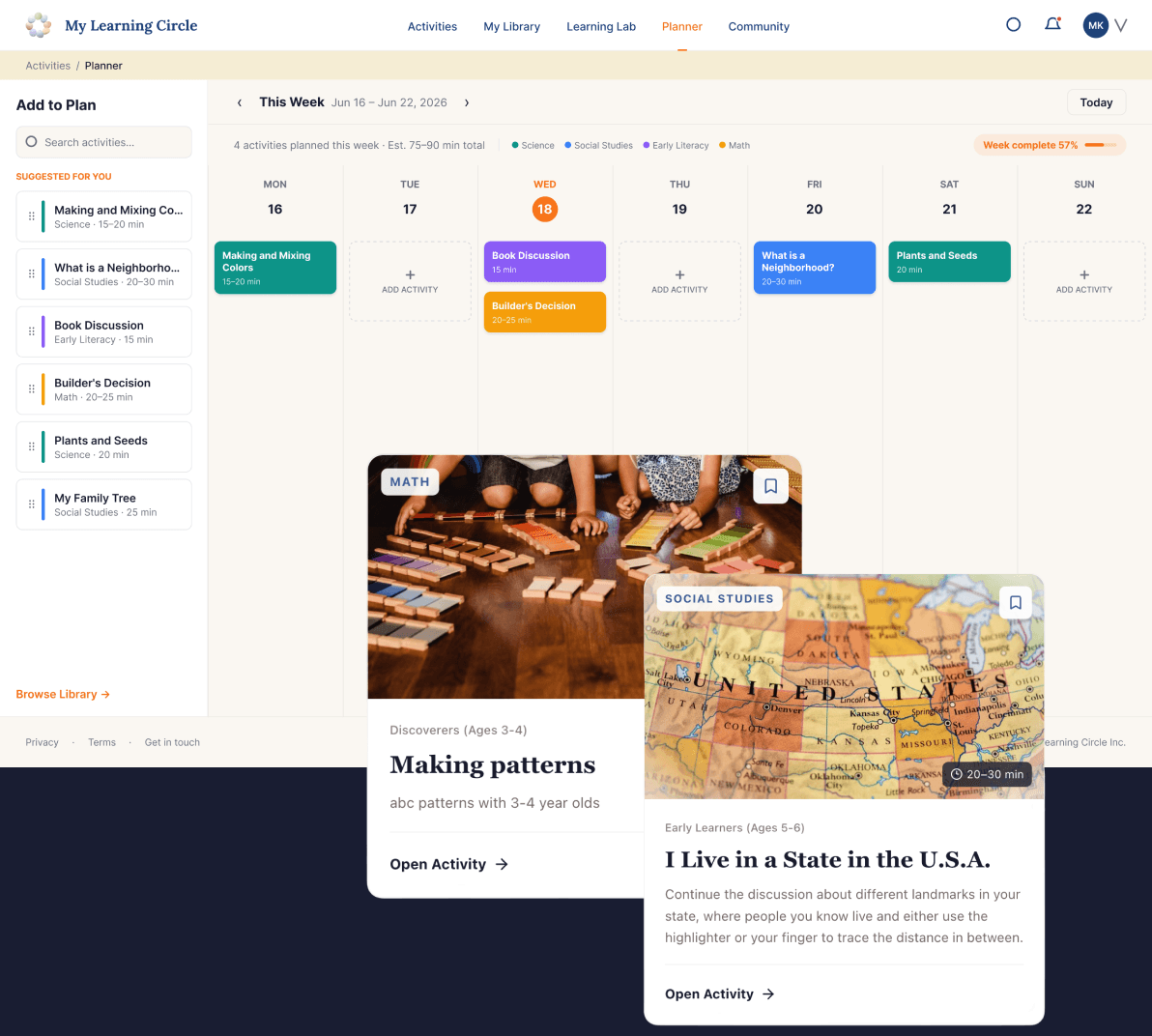
Hundreds of play-based activities for you to do with your children. All completely FREE.
SOCIAL STUDIES20–30 minEarly Learners (Ages 5-6)
Children create a neighborhood map and explore community through drawing and storytelling.
Open Activity →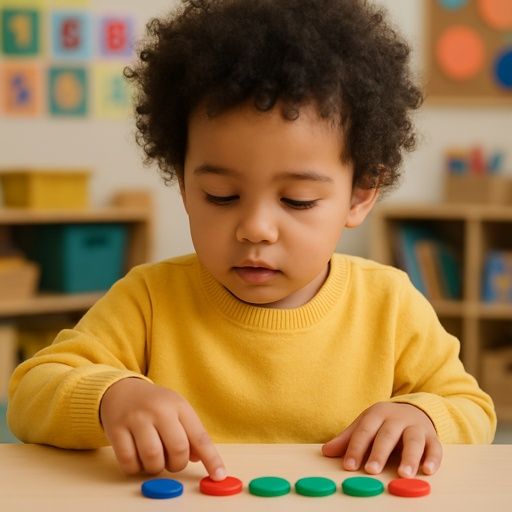 MATH15–20 min
Discoverers (Ages 3-4)
Kids match two groups of everyday objects and decide which has more, which has less, or if they’re the same. Language building learning and using the words more than, less than, and equal to with sets up to 20.
Open Activity → WRITING15–20 min
Early Learners (Ages 5-6)
Children progress at different rates based on interest and ability. Choose what works best for your child. Use these plans as a flexible guide. Many lessons are interdisciplinary, covering multiple content areas. Teach them as stand-alone activities or combine 4–5 into a weekly unit. Each plan is play-based and screen-minimal and builds social-emotional and higher-order thinking skills alongside academics.
Open Activity → WRITING30 min
Primary Learners (Ages 7-9)
Children progress at different rates based on interest and ability. Choose what works best for your child. Use these plans as a flexible guide. Many lessons are interdisciplinary, covering multiple content areas. Teach them as stand-alone activities or combine 4–5 into a weekly unit. Each plan is play-based and screen-minimal and builds social-emotional and higher-order thinking skills alongside academics.
Open Activity → WRITING30 min
Primary Learners (Ages 7-9)
Children progress at different rates based on interest and ability. Choose what works best for your child. Use these plans as a flexible guide. Many lessons are interdisciplinary, covering multiple content areas. Teach them as stand-alone activities or combine 4–5 into a weekly unit. Each plan is play-based and screen-minimal and builds social-emotional and higher-order thinking skills alongside academics.
Open Activity → READING30 min
Primary Learners (Ages 7-9)
Children progress at different rates based on interest and ability. Choose what works best for your child. Use these plans as a flexible guide. Many lessons are interdisciplinary, covering multiple content areas. Teach them as stand-alone activities or combine 4–5 into a weekly unit. Each plan is play-based and screen-minimal and builds social-emotional and higher-order thinking skills alongside academics.
Open Activity → READING25 min
Primary Learners (Ages 7-9)
Children progress at different rates based on interest and ability. Choose what works best for your child. Use these plans as a flexible guide. Many lessons are interdisciplinary, covering multiple content areas. Teach them as stand-alone activities or combine 4–5 into a weekly unit. Each plan is play-based and screen-minimal and builds social-emotional and higher-order thinking skills alongside academics.
Open Activity → READING15–20 min
Primary Learners (Ages 7-9)
Children progress at different rates based on interest and ability. Choose what works best for your child. Use these plans as a flexible guide. Many lessons are interdisciplinary, covering multiple content areas. Teach them as stand-alone activities or combine 4–5 into a weekly unit. Each plan is play-based and screen-minimal and builds social-emotional and higher-order thinking skills alongside academics.
Open Activity →Whole-Child Growth We connect academics with social-emotional learning and higher-order thinking not as add-ons, but as one way of learning. It’s the difference between a child who can recite an answer and one who knows how to work through a problem, manage frustration, and stay curious.
Connected, Multi-Age Learning One theme links every subject, so understanding deepens instead of living in isolated worksheets. Activities flex across ages 3–9, so siblings (or a co-op group) explore the same big idea at their own level, no more planning three separate lessons for three different kids.
Future-Ready Skills and Standards That Still Matter Independence, creativity, and real-world thinking last longer than any single test. We also map learning to state standards in meaningful ways, so you’re not choosing between what counts on paper and what helps your child grow. School and life readiness start early;....not the spring before kindergarten.
DISCOVERY
AI-curated activity cards matched to your child's age, unique interests, and natural curiosity.
COMMAND
Weekly schedules and highly flexible plans designed specifically to fit into real, busy family life.
COMMUNITY
Voice-to-journal transcription with rich, AI-powered reflections on learning breakthroughs.
CURRICULUM
Camera-powered nature identification combined instantly with hands-on, active learning.
Private by design · On-device processing · Launching Fall 2026
Whether you homeschool, fill the gaps after school and on school breaks, or learn together in a co-op, My Learning Circle gives you play-based plans, multi-age flexibility, and real support, including thematic units, weekly meetings, and teaching guidance, so teaching your child is enjoyable, not like another full-time job.
You’re building the day. Membership gives you thematic units already planned, weekly meetings for support, and teaching guidance so you’re not figuring out curriculum and the hard moments alone.
School covers a lot. You want after-school, weekends, and summer to mean something without more worksheets, homework battles, or defaulting to screens. Our activities let your child choose what they want to learn.
You’re gathering mixed ages and abilities. You need themes strong enough for a shared morning and flexible enough for every child to learn side by side. We have you covered in the Early Childhood spaces, children ages 3-9. Book a free planning session with us!
When implemented consistently, these tools help children develop the analytical thinking skills they need. They learn to reason, question, and evaluate, not just memorize.
Children learn to manage their emotions, sustain attention, and engage in meaningful discussion skills that serve them in every area of life.
They develop independence and approach new challenges with confidence. These are the skills that shape future-ready adults.
These outcomes build over time with consistent, intentional practice.
Explore guided practices, field notes, and how-to videos designed to spark curiosity and build real-world skills.
Behavior is communication. Find out why they are frustrated.
Read ArticleAs You Facilitate Learning Think About Your Instruction Style
ReadChildren are motivated when they believe in themselves and enjoy the task.
Read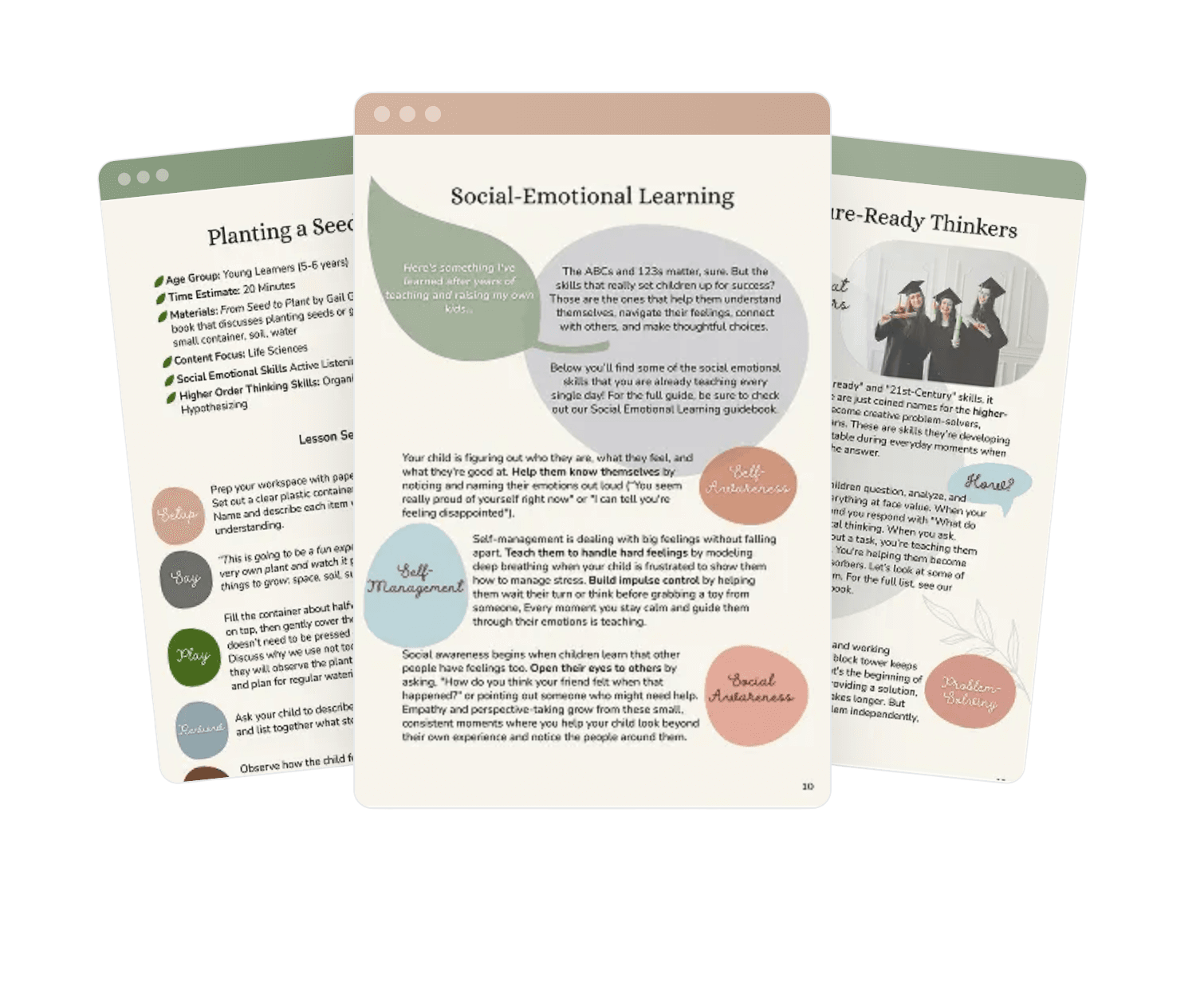
Enter your email and receive immediate access to the My Learning Circle Future-Ready Learning Toolkit. Start building deep thinkers, emotionally resilient learners, and confident problem-solvers right at home.