
The False Choice Between Play-Based and Academic Learning
The False Choice Between Play-Based and Academic Learning
The past 20 years of education in the United States has certainly shown great strides in some areas, but let's be honest, the most recent NAEP and PISA scores should have us all worried. Dismal test scores on both national and international tests tell us something is seriously wrong with how we're educating young people. This isn't just an education problem, it impacts everyone.
And no, we can't just blame COVID-19 and the 2020 school closures. The downhill spiral began years before, as anyone reviewing test scores can tell you. Back in 2016, Drs. Kathy Hirsh-Pasek and Roberta Michnick Golinkoff wrote in Becoming Brilliant that "the American education system must move from the more traditional definition of success as good test scores in reading, writing, and mathematics (with a little science and social studies thrown in) to one that prepares our children to become competitive business leaders, entrepreneurs, and scientific pioneers." They argued that success should be judged by outcomes that nurture "happy, healthy, thinking, caring, and social children who will become collaborative, creative, competent, and responsible citizens." Hirsh-Pasek and her team now lead the Active Playful Learning initiative and are working in various states to make these changes happen.
There have been many recent conversations about returning to play-based learning. I'm completely on board. It's the only style of teaching I used in my 15 years as a grade schoolteacher and 19 years as a university professor coordinating a teacher preparation program. This conversation goes hand in hand with the reality backed by research that our children's mental health has taken a serious hit from hours spent on screens and social media each day. Some children and adolescents report being attached to their phones nearly every waking hour. I'm reading Jonathan Haidt's The Anxious Generation (released in 2024), and the statistics he shares should gravely concern any parent with children between 3 and 20 years old. Honestly, we should say birth to 25.
As a former university professor, I can absolutely attest to the increase in mental health issues among students over the past decade. Fortunately, in the program I coordinated, students were surrounded by their cohort for three years, and we worked very diligently on creating a supportive community. This helped tremendously with the day-to-day stresses of college life, something not all schools or programs focused on until recently. My teacher preparation students first earned an Applied Developmental Psychology degree before their M.Ed., so what they were learning supported them and, eventually, their own young students.
What's the Real Difference?
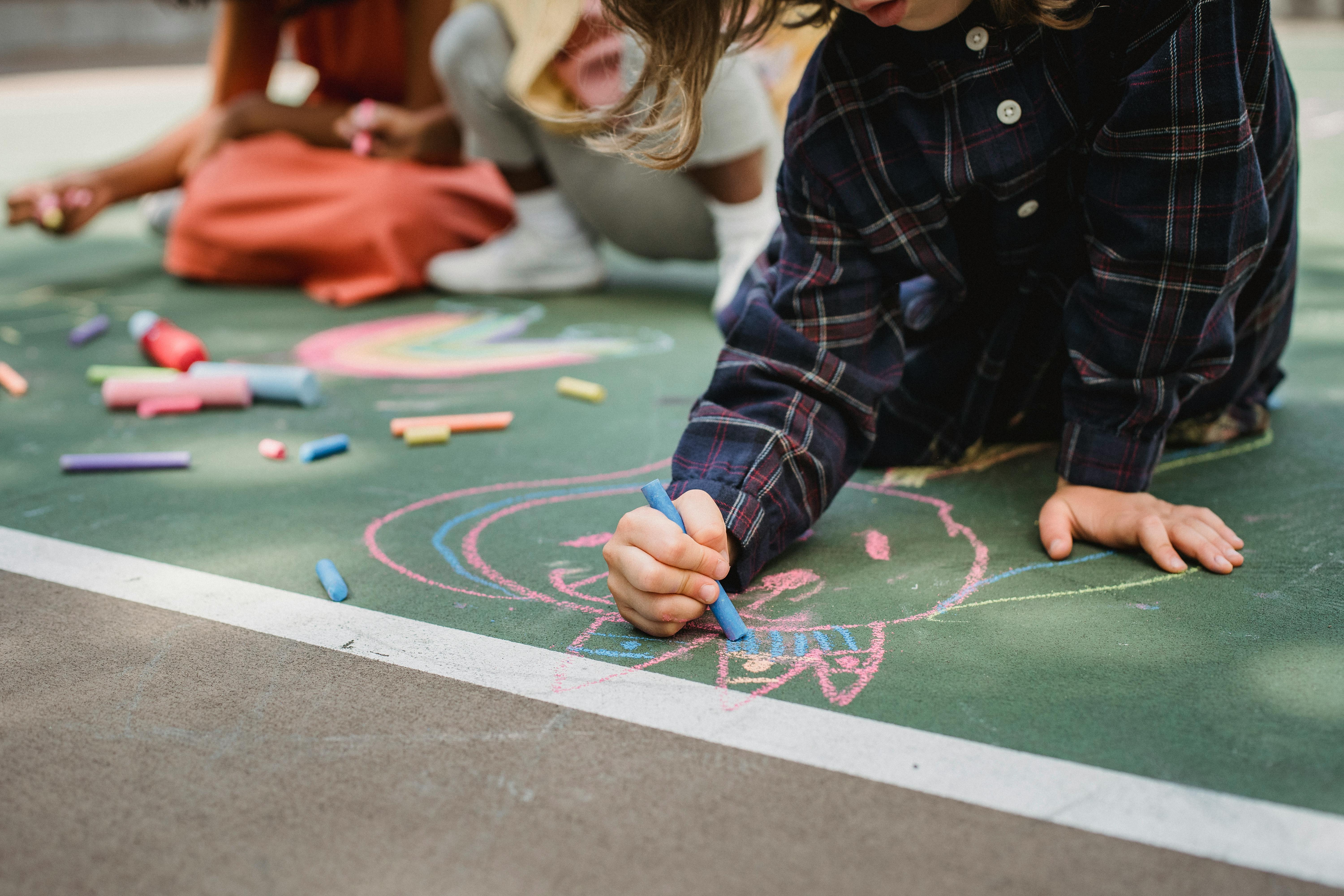
Let's define both approaches. Play-based learning emphasizes learning through exploration, imagination, and child-directed activities. Children learn problem-solving, social skills, emotional regulation, and early math and literacy concepts through hands-on, child-directed lessons and activities. Research by Zosh, Gaudreau, Golinkoff, and Hirsh-Pasek (2022) published in Young Children demonstrates that play develops critical thinking, creativity, and intrinsic motivation. A 2022 study by Parker, Thomsen, and Berry titled "Learning Through Play at School: A Framework for Policy and Practice" further supports these findings. Countries like Finland, which use play-based approaches and delay formal academics until age 7, consistently rank high in educational outcomes. According to a 2021 study by the Finnish National Agency for Education, children who participate in play-based early education develop stronger problem-solving skills and demonstrate higher levels of emotional intelligence than their peers in traditional academic settings.
Academic learning can certainly take place using play and project-based methods. The problem occurs when the method focuses only on structured, teacher-directed instruction in specific skills like reading, writing, and math from an earlier age. Proponents suggest this gives children a head start on essential skills, better prepares them for standardized testing, and ensures all children receive explicit instruction rather than leaving learning to chance. They worry that play-based approaches may leave some children, especially from disadvantaged backgrounds, without the foundational skills they need.
Of course, we can trace both sorts of learning back to what a child has been taught by their family, caregivers, and community before entering formal education in kindergarten. This includes approved homeschooling communities who often bring families together in learning pods.
The Questions People Ask
One big question is timing. When should formal academics begin? At 3 years old? 5? 7? Reality is it often depends on the child. I'm a supporter of play-based learning, and I can share a few examples from experience:
Example 1: Trying to have a 3-4-year-old hold a pencil and write words or their name on lined paper is not developmentally appropriate. Some kids can write their name on a larger, blank piece of paper when they're 4, but most cannot. In fact, fine motor skills aren't developed enough for many to even hold a pencil correctly. Many preschool teachers have children begin pre-writing tasks using crayons or markers instead.
Example 2: Can we expect all children to come to kindergarten already knowing how to read? Some do, in fact, both of my sons were reading when they entered kindergarten. However, most children are not, and that's okay. A play-based learning environment filled with pre-reading and pre-writing activities as part of each school day will support them in kindergarten and first grade as they begin to read and write. I know that both of my sons' ability to read at a young age was, for the most part, due to us reading 4-5 books every night before bedtime. As they got older, I started demonstrating pre-reading skills, like reading from left to right. Years of exposure to books benefited them greatly and they picked up early reading from their exposure with us at home and at their preschool. It wasn’t really a plan to make sure that they were reading before kindergarten.
Who Comes to School Prepared?
Here's the reality, children who are typically developing come to school with vastly different levels of experience. Some children are spoken to throughout the day, singing songs and reading books at home or at a childcare center. Some are not. Some children have had lots of outside and inside play that includes movement and development of both fine and gross motor skills. Some have not. Some don't even have a single book in the home.
Here's something important for parents to know, if a child comes to school reading and writing, that's not necessarily an indication of giftedness, though some parents believe this. In many cases, it's an indicator that the child has had many informative experiences early in life. Regarding long-term outcomes? Research by Bailey, Duncan, Odgers, and Yu (2017) on "Persistence and Fadeout in the Impacts of Child and Adolescent Interventions" suggests that early academic gains often fade by third grade, while play-based benefits persist. Studies by Weiland, Unterman, and Shapiro published in Child Development found that while prekindergarten programs produced initial academic gains, most of the "catch-up" or "convergence" in literacy skills between enrollees and non-enrollees occurred during kindergarten.
Finding Balance
Most experts now advocate for a balanced approach that integrates purposeful play with learning goals alongside some structured instruction, adjusted to children's developmental readiness. The debate often reflects broader values about childhood, testing culture, and what education should accomplish. But as with any educational strategy, there are important questions to consider:
What's the quality of the teaching? The debate assumes that the teaching approach matters most, but research by Eric Hanushek (2004) and RAND Corporation (2021) studies suggests the quality of implementation and teacher skill matter far more than whether you call it "play-based" or "academic." Research consistently shows that teacher quality is "the most important school-related factor influencing student achievement" (Economic Policy Institute, "Teacher Quality: Understanding the Effectiveness of Teacher Attributes"). A skilled teacher can make either approach work; a poor or unprepared teacher can make either fail.
Are relationships being built? Children learn best when they feel safe, seen, and connected to caring adults. The quality of teacher-child relationships may matter more than the curriculum approach. When I was writing my dissertation, I used a theory called positioning. Teachers take different positions with different children. One child might be difficult for various reasons. Some teachers give that child extra attention. Others get bothered and frustrated. Here's what matters, children know what the teacher thinks of them and the relationship most often impacts learning.
Are we meeting each child where they are? Children have vastly different temperaments, learning styles, and developmental timelines. Some thrive with structure; others need exploration. Neurodivergent children may need entirely different approaches. Not all strategies work best for each child. This leads to the question, does the teacher fully understand how to differentiate for their students, and maybe more importantly, is that a practice encouraged in the school?
What are we preparing kids for? Recently the terms "future-ready skills" and 21st Century Skills have been used widely. But what are these skills? If we're preparing children for a world 15-20 years from now, is early reading at four versus six really what will matter, or is it adaptability, creativity, critical and analytical thinking, and resilience?
What's the hidden curriculum? What are children learning about themselves, about authority, compliance, risk-taking, and their own agency? Academic pressure may teach "I'm not smart enough." Unstructured play may teach "adults don't value learning." These implicit messages may matter more than explicit content. I believe, from my own experience, that it's possible to merge the two practices so that in-depth academic lessons can be taught through lessons that incorporate both play-based learning and higher-level academics.
The Systemic Pressures
Ever since No Child Left Behind (NCLB) rolled out in 2002, we've had systemic pressures. The push for earlier academics stems from testing accountability, parent anxiety about competition, and educational inequality, not from child development research. I was still teaching in grade school for the first years of NCLB. And frankly, since I was teaching in Texas, we had started using most of the standards many years before because under then-Governor Bush, the same sorts of standards rolled out in the 1990s in Texas school districts.
But here's the thing, we followed standards and used a play-based approach that included differentiation, small group workstations, and a holistic approach to our teaching strategies. It all worked together, and students were successful! I used to tell my college students not to fear state standards and that I could show them how to build lessons that hit many standards and integrated across content areas.
How to Merge the Two Approaches
Effective teachers blend approaches all the time. For example, a child building with blocks (play) is also learning spatial reasoning, counting, balance, and problem-solving (academic content). A teacher might join the play and ask, "How many more blocks do you need to make the towers equal?" That's neither purely play nor purely academic, it's teaching content through play.
Other examples:
Reading a story together, then acting it out with puppets
Conducting a science experiment that feels like play but teaches observation and hypothesis.
Creating an imaginary store where children use real math for transactions
These all remove the boundary between the two strategies.
There are many ways to make this work:
Intentional play: Structured activities with clear learning goals, delivered through engaging, child-directed methods. The teacher sets up provocations or challenges, but children explore solutions.
Learning centers: Both phonics lessons in small groups AND open exploration time with purposefully designed materials that teach concepts indirectly.
Project-based approaches: Children pursue extended investigations of topics that interest them, with teachers scaffolding both play and formal skill-building as needed.
Purposeful play: Adults design the environment and materials with learning goals in mind, but children have autonomy in how they engage.
Making It Work
The key is being intentional about lesson and activity planning. It's so important that teachers fully understand they are not in the classroom to teach to the middle third of their group. There are many children who are not typically developing, and there are also many children who are advanced. Finding the sweet spot to differentiate through small group teaching is essential to service every child.
In grade school I taught this way, as did my colleagues in our school district, and the key to being successful was learning how to use these strategies. We had many professional development activities and mentoring support that made our learning interesting and valuable, and we passed that on to our young students. We were well-informed, and anyone who didn't learn a strategy or lesson in their university preparation programs was able to "catch up" with the district's professional development opportunities. In fact, a few years before I moved and went back to school for my Ph.D., we even began having differentiated professional development for every teacher. We truly practiced what we preached.
The Perfect Storm
I'm thrilled to read books, articles, and blogs about returning to a play-based way of teaching. The term "perfect storm" is sometimes used in a positive way, but this has been a terrible storm in our educational system, and it's come from many places.
One source, when NCLB picked up steam in the mid-2000s, large amounts of funding were attached to performance. Many schools literally dropped much of their teaching around science and social studies in the early years to focus on reading and math so that students would "pass the test."
Then, as Haidt outlines in depth in The Anxious Generation, around 2010 the use of smartphones and social media began to seep into our children's lives and eventually impact the mental health of many in a negative way. Phones have just now, in 2025, started to be banned more extensively in schools, thanks to Haidt and many other movements.
The entry of Every Student Succeeds Act (ESSA) that replaced NCLB in 2015 was a bit of an improvement. However, it did not stop the intense focus on "teaching to the test," as the statement goes.
Now, over the past few years, we've had so many arguments, I cannot even call them conversations, about various topics from Critical Race Theory (CRT), transgender students, and banning books. I can tell you that in the great, great majority of schools across the U.S., teachers are not talking about CRT or gender-affirming operations. And many of the books being banned are classics that we all read and enjoyed when we were in school. The time spent on these arguments could have been better spent on reviewing teacher preparation and professional development that is supported from the top of each district.
Where We Go from Here
I am truly amazed that when I read articles or listen to news reports about the state of the U.S. educational system that we rarely hear much about the preparation of teachers. There is a great shortage of teachers throughout the country and a severe shortage in some areas like special education. The shortage has allowed people with little training to be hired on short term contracts in various districts. Some of those people end up being great instructors, most do not.There should be more focus on the quality of teacher preparation. We are most definitely at an inflection point in educating children in the United States. We need to come together, clear our minds, take a deep breath and put a smile on our faces, then discuss what we can do to support the learning and development of our young children. Our future literally depends on it.
References:
Bailey, D., Duncan, G. J., Odgers, C. L., & Yu, W. (2017). Persistence and fadeout in the impacts of child and adolescent interventions. Journal of Research on Educational Effectiveness, 10(1), 7-39.
Finnish National Agency for Education. (2021). Study on play-based early education outcomes. Helsinki, Finland.
Golinkoff, R. M., & Hirsh-Pasek, K. (2016). Becoming brilliant: What science tells us about raising successful children. Washington, DC: American Psychological Association.
Haidt, J. (2024). The anxious generation: How the great rewiring of childhood is causing an epidemic of mental illness. New York: Penguin Press.
Hanushek, E. A. (2004). Some simple analytics of school quality. Cambridge, MA: National Bureau of Economic Research.
National Center for Education Evaluation. (2020). Teacher quality: Understanding the effectiveness of teacher attributes. Washington, DC: Economic Policy Institute.
Parker, R., Thomsen, B. S., & Berry, A. (2022). Learning through play at school: A framework for policy and practice. Frontiers in Education, 7, 751801.
RAND Corporation. (2021). Teachers matter: Research on measuring teacher effectiveness. Santa Monica, CA: RAND.
Zosh, J. M., Gaudreau, C., Golinkoff, R. M., & Hirsh-Pasek, K. (2022). The power of playful learning in the early childhood setting. Young Children, 77(2), 13-21.